
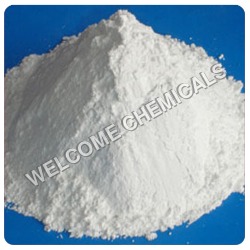
Calcium Carbonate PPT
Product Details:
- Density 0.40 to 0.80 Gram per litre (g/L)
- Appearance Powder; Bulk
- Product Type Chemical
- Ph Level 9.0
- Shelf Life 5 Years
- Molecular Formula CCaO3
- Physical Form Powder
- Click to View more
Calcium Carbonate PPT Price And Quantity
- 16 INR/Kilograms
- 500 Kilograms
Calcium Carbonate PPT Product Specifications
- 0.40 to 0.80 Gram per litre (g/L)
- Powder; Bulk
- 100.09 g/mol Kilograms (kg)
- Chemical
- 9.0
- 5 Years
- CCaO3
- Powder
Calcium Carbonate PPT Trade Information
- 10 Kilograms Per Day
- 2 Days
- Yes
- Sample costs shipping and taxes has to be paid by the buyer
- All India
Product Description
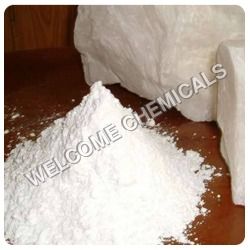
Calcium Carbonate PPT
Calcium Carbonate PPT is used to deal with soil acidity in agriculture. This mineral is also used to control ph of soil. It also acts as suitable fertilizer conditioner for improving crop productivity. Available in powder form, its ph value is 9.0. Formulated under controlled temperature, this compound has balanced composition. Calcium Carbonate PPT contains silica, chloride, iron, alumina, sulphate, magnesia and soluble alkali. It has been verified as per its shelf life, possible toxin content, environment friendliness and processing method. It can be stored for 5 years.
Precipitated Calcium Carbonate is white and micro sized material, purified,processed from natural pure limestone lumps.
- Chemical Formula : CaCo3
- Physical Properties :
- Appearance : White fine powder
- Sp. Gravity : 2.5 - 2.7
- Bulk Density : 0.6 to 0.8
- Oil absorption value : 40 to 50%
- PH of 10% sol. : 8.5 to 8.8
- Loss on ignition : Max0.5
- Water soluble matter: Max 1%
- Volatile Matter : Min 96%
Chemical Composition:
- Calcium Carbonate content : Min 96%
- Silica as S102 : Max. 0.3%
- Magnesia as MgO : Max. 0.5%
- Sulphate as SO4 : Max. 0.3%
- Chloride as Cl : Max. 0.1%
- Fe, Al,PO4 & Matter Insoluble : Max. 0.5%
- Soluble Alkali as Na20 : Max. 0.2%
Applications :
- Plastics - PVC, Cable, Leather cloth, Foams. Paints- in different grades of paints widely used. Rubber, Construction Chemicals.
High-Quality Manufacturing Process
Our Calcium Carbonate PPT is produced through a controlled precipitation process, ensuring high purity and uniform particle size. This method allows for optimal performance in varied applications. With state-of-the-art facilities in India, every batch is rigorously tested for consistency and reliability, meeting industry-specific needs for quality material.
Versatile Industrial Applications
Precipitated Calcium Carbonate finds extensive usage across multiple sectors like plastics, rubber, paints, paper, and pharmaceuticals. Its fine powder form and specific physical properties make it ideal for improving product whiteness, gloss, and structural integrity. The stable pH and long shelf life further enhance its appeal in demanding manufacturing environments.
Backed by Trusted Exporters and Suppliers
As a leading exporter, manufacturer, supplier, and wholesaler in India, we provide Calcium Carbonate PPT in bulk quantities. Our logistics and customer support ensure timely delivery to both domestic and international clients. We prioritize quality assurance, competitive pricing, and after-sales support for a smooth sourcing experience.
FAQs of Calcium Carbonate PPT:
Q: What is the typical usage of Calcium Carbonate PPT powder?
A: Calcium Carbonate PPT is commonly used as a filler and pigment in industries such as plastics, rubber, paper, paints, and pharmaceuticals due to its fine powder form and chemical purity.Q: How should Calcium Carbonate PPT be stored to maintain its 5-year shelf life?
A: The powder should be stored in a cool, dry environment, away from moisture and direct sunlight, and in tightly sealed containers to preserve its quality and effectiveness over time.Q: What is the manufacturing process for Precipitated Calcium Carbonate?
A: Precipitated Calcium Carbonate is manufactured through a controlled precipitation process, where calcium ions react with carbonate ions under specific conditions, resulting in a pure and consistent fine powder.Q: Where is this Calcium Carbonate PPT manufactured and supplied from?
A: This product is manufactured in India and supplied globally by reputable exporters, manufacturers, suppliers, and wholesalers specializing in industrial minerals.Q: When is Calcium Carbonate PPT most beneficial in industrial applications?
A: It is most beneficial when high purity, specific pH, and consistent particle size are required, particularly in industries like paints, plastics, and paper, where these qualities impact product performance.Q: What are the benefits of using this Calcium Carbonate with a pH level of 9.0?
A: A pH level of 9.0 ensures the product remains moderately alkaline, helping to provide stability and prevent unwanted chemical reactions in sensitive formulations, especially in paper and paint production.
Price:
- 50
- 100
- 200
- 250
- 500
- 1000+

Other Products in 'Natural Mineral Chemicals' category


- K-003, Sonam Sneh CHS.Ltd., Golden Nest, Phase-1, Mira Road-East, Mira Bhayandar - 401105, Maharashtra, India
- Phone : 08045478249
GST : 27AFGPV2505L1Z5

- Mr RAJESH PREMJI VADHER (Proprietor)
- Mobile : 08045478249
- Send Inquiry
 Send Inquiry
 Send Inquiry
 Send SMS
Developed and Managed by Infocom Network Private Limited.


